
There’s a moment before every solo hike when the questions begin. Am I prepared enough? What if I get lost? What if something happens? Am I too old for this?
I’ve asked myself those questions more times than I can count.
And then I take the first step.
That first step has carried me through some of the most remote places on Earth; from the wild Alaska bush to the towering Himalayas, across the rugged Andes, throughout the Rocky Mountains, and today, into the breathtaking Alps I now call home. I’ve spent a lifetime hiking, backpacking, and traveling in the backcountry, often alone, learning that courage isn’t the absence of fear. It’s moving forward despite it.
If you’re over 50 and dreaming about hiking solo, you don’t have to be fearless. You simply must take the steps to be prepared.
Age Isn’t the Limitation Your Mindset Is
Somewhere along the way, society convinced us that adventure belongs to the young.
I couldn’t disagree more.
By the time we reach our 50s, we’ve accumulated something far more valuable than youthful confidence. We’ve earned life experience and have money to burn.
- We’ve solved problems.
- We’ve survived setbacks.
- We’ve learned patience.
- We’ve become better decision-makers.
Those are exactly the skills that make excellent solo hikers.
While younger hikers may rely on speed and stamina, experienced hikers rely on judgment. And judgment is one of the most powerful pieces of safety equipment you can carry.

Fear Is Normal
Even after decades of hiking remote trails around the world, I still feel butterflies before setting off into unfamiliar terrain. There are times when I would much rather turn around than keep going into unknown territory, but that inner drive, inner knowing that something greater lies beyond, keeps me going. I look where I want to go and keep going. Putting one foot in front of the other.
Fear isn’t your enemy.
It’s information.
Healthy fear reminds us to double-check our gear, watch the weather, carry enough water, tell someone our plans, and know when to turn around.
What gets people into trouble isn’t fear.
It’s overconfidence.
The goal isn’t to eliminate fear. It’s to replace uncertainty with preparation.
Confidence Comes From Preparation
Recently, a friend told me she had signed up for a long, challenging mountain hike and asked how she could possibly prepare for it. She worried she wasn’t ready for the elevation, the distance, or the long day ahead.
My advice surprised her.
I told her not to train by trying to recreate the entire hike.
Think about marathon runners. They don’t run 26.2 miles every day while training. They build gradually with shorter runs throughout the week and maybe one longer run to prepare their bodies and minds.
Hiking works the same way.
If your goal includes significant elevation gain, seek out hill climbs, but do it in small increments. Add a little more elevation, a little more distance, and a little more time on your feet each week. Your body adapts surprisingly well when you give it the chance.
When I explained it this way, I could see her confidence grow. Suddenly, the challenge didn’t feel impossible. It became manageable because she had a plan.
That’s exactly how I started many years ago.
I didn’t wake up one morning and decide to hike remote mountains around the world. I built my confidence one trail at a time. One longer hike led to another. Each success made the next adventure feel possible, and before I knew it, I was trekking through places I’d only dreamed about.
Preparation turns intimidating goals into achievable ones.
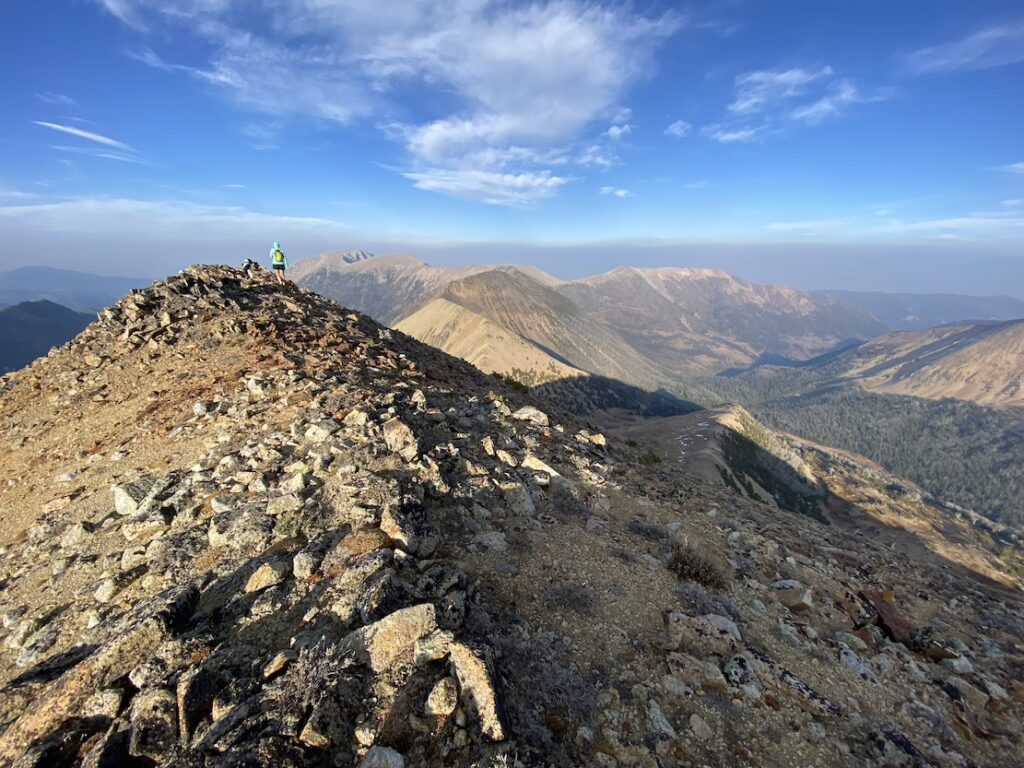
How to Train for Long Hikes After 50
Cross-Training Makes You Stronger. One thing I recommend to nearly everyone—especially hikers over 50—is cross-training.
Hiking uses far more than your legs. Long days on the trail demand strong hips, a stable core, good balance, healthy shoulders, and endurance throughout your entire body.
Strength training, cycling, swimming, yoga, Pilates, rowing, skiing, or other activities all help build the supporting muscles that keep you moving efficiently, reduce fatigue, and lower your risk of injury.
As we get older, maintaining muscle mass and balance becomes even more important. Cross-training isn’t just about hiking better; it’s about staying healthy enough to keep exploring for years to come.
Build Confidence One Trail at a Time
Start Smaller Than You Think.
One of the biggest mistakes I see is believing your first solo hike has to be some epic adventure.
It doesn’t.
Confidence is built through repetition.
- Start with a familiar trail.
- Then go again, for slightly longer.
- Then add more elevation.
- Eventually combine the two.
Before long, those hikes that once seemed impossible begin to feel like normal weekends.
Every hike becomes another brick in the foundation of self-trust.
The mountains aren’t going anywhere.
There’s no race.
Your Pace Is the Right Pace
One of my favorite things about hiking alone is that nobody is waiting for me.
- I can stop to photograph wildflowers.
- I can sit beside an alpine lake for an hour.
- I can wait for perfect light to photograph a mountain peak.
- Or I can simply stand in silence and listen.
Solo hiking removes the pressure to keep up with anyone else’s expectations. Hiking into nature and spending hours there is truly my happy place.
After 50, that’s one of life’s greatest gifts.
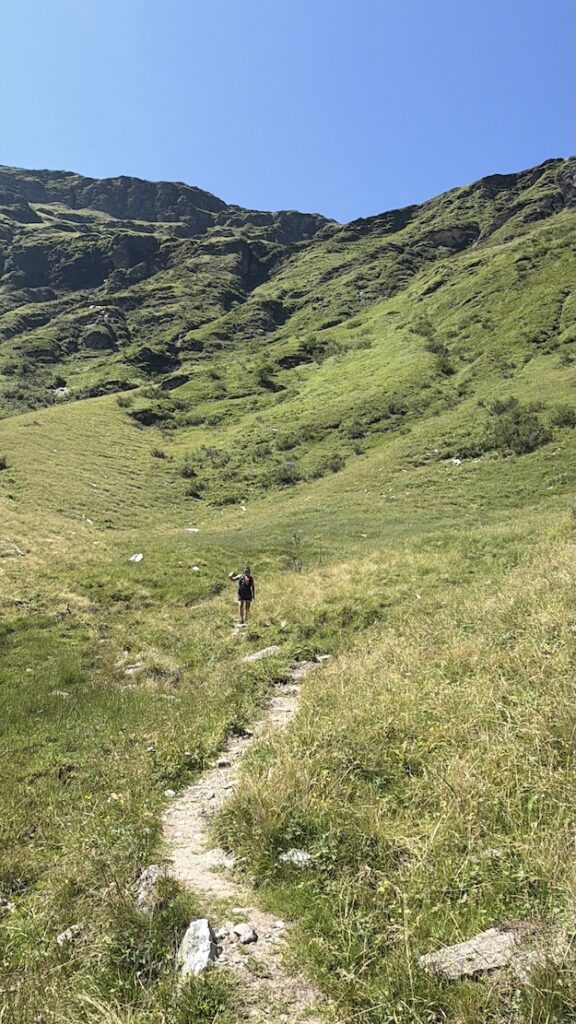
Learn to Listen to Yourself
One lesson the backcountry has taught me over the years is to trust my instincts. Trust your gut as they say.
If something doesn’t feel right, I pay attention.
Maybe the weather is changing. This is one of the biggest factors in where I go and how I prepare for hikes. Learn to recognize weather patterns. The last thing you want is to be out on a peak and see a thunderboomer rolling in. I’ve had a few times where I couldn’t see the weather until I approached a peak and then turned tail and ran down what I had just struggled for hours to approach to avoid getting hit by lightning. Be weather aware!
Maybe I’m more tired than I realized.
Fatigue is real, and it happens more as I age. I overestimate what I can do. This happened to me the other day!! I rode up a ridge with my e-bike and then wanted to hike another hour or so to a peak, and my legs were not feeling it. So, much to my disappointment, I bailed and rode home. I had done the peak before, so it wasn’t a loss; even if I hadn’t, I’d save it for another day when I’m feeling stronger. There is nothing wrong with walking away from something. I hike and bike to do it another day.
Maybe that trail looks more technical than expected. This happens on occasion, and you must be comfortable turning around if it’s too much. No peak or destination is worth your life or injury.
Turning around is never failure.
It’s wisdom.
The mountains reward good decisions far more than bold ones.
Respect Wildlife
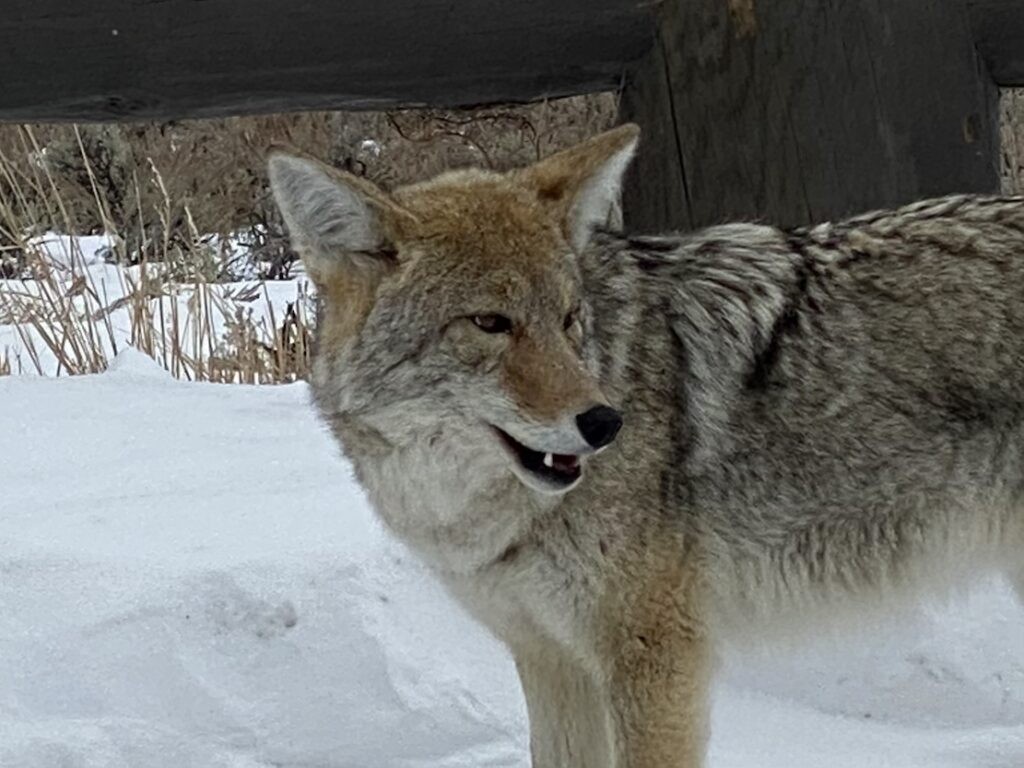
I’ve spent enough time hiking in Alaska, the Rockies, and other wild places to know that respecting wildlife is simply part of traveling in the backcountry.
If you’re hiking in bear country, always carry bear spray where it’s immediately accessible—not buried inside your backpack—and know how to use it before you need it. Practice removing the safety clip and understand the proper deployment distance. Take old or expired canisters and practice.
Making noise on the trail, staying alert, and giving wildlife plenty of space are equally important.
Preparation isn’t about expecting danger. It’s about respecting the environment you’re privileged to explore.
The World Is Kinder Than the News Makes It Seem
People often ask me whether I’m afraid to hike alone.
The truth is, I’ve encountered far more kindness than danger.
- I’ve shared trail snacks with strangers in the Rockies.
- Received route advice from local hikers in the Alps.
- Met incredible people while trekking through the Himalayas.
- Found generous hospitality in remote mountain communities throughout South America.
- Yes, bad things can happen anywhere.
But letting fear make every decision means missing countless moments of beauty, connection, and personal growth.
Hiking Alone Doesn’t Mean You’re Alone
One of the surprising things about solo hiking is how connected you become.
- You notice birdsong.
- You hear streams.
- You observe changing weather.
- You become more aware of your surroundings and yourself.
Many of the biggest life decisions I’ve ever made happened while walking alone on mountain trails. I find it calms my head, heart, and soul.
The mountains have a way of clearing the mental clutter that everyday life creates.
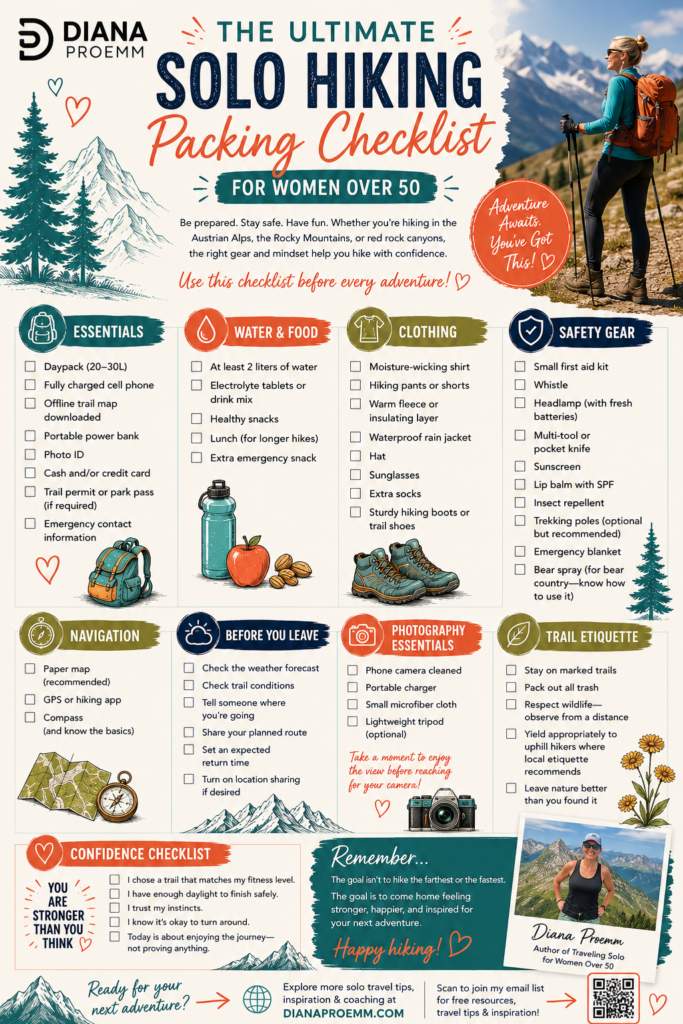
The Checklist Is Your Safety Net
Every experienced backcountry traveler relies on systems.
Pilots use checklists.
Mountain guides use checklists.
Search and rescue teams use checklists.
I do too.
Having a routine means you’re less likely to forget something important when excitement or nerves kick in.
That’s why I’ve put together my Backpacking list for over 50, which is a practical guide covering everything from essential gear and navigation to emergency planning and trail safety.
It isn’t designed to make hiking complicated.
It’s designed to make you feel confident enough to go.
**One last safety tip: check in with a buddy or family member before departing and let them know where you are going and when you expect to be back. My check-in person would depend on their availability, but mainly it was another outdoor athlete who knows exactly or approximately where I’d be in case they didn’t hear from me and could rally the appropriate team to help should I not return. In Montana, we never had service in the mountains, but on peaks I could gain service and would send a note saying where I was and if I was still on schedule. One friend even had me on location sharing. Your friends/family are your best allies, especially when going alone.
It’s Never Too Late to Begin
If you’ve always dreamed of hiking alone but have been waiting for the “right time,” consider this your invitation.
The mountains don’t care how old you are.
They don’t care what career you had, whether your children are grown, whether you’ve recently retired, or whether you’re starting over after a major life change.
They simply ask that you come prepared, stay humble, respect the trail, and keep putting one foot in front of the other.
I’ve spent a lifetime wandering through some of the world’s most spectacular mountain landscapes—from the Alaska bush to the Himalayas, the Andes, the Rockies, and now the Alps.
Every trail has taught me something new.
But perhaps the greatest lesson has been this:
You are far more capable than you think.
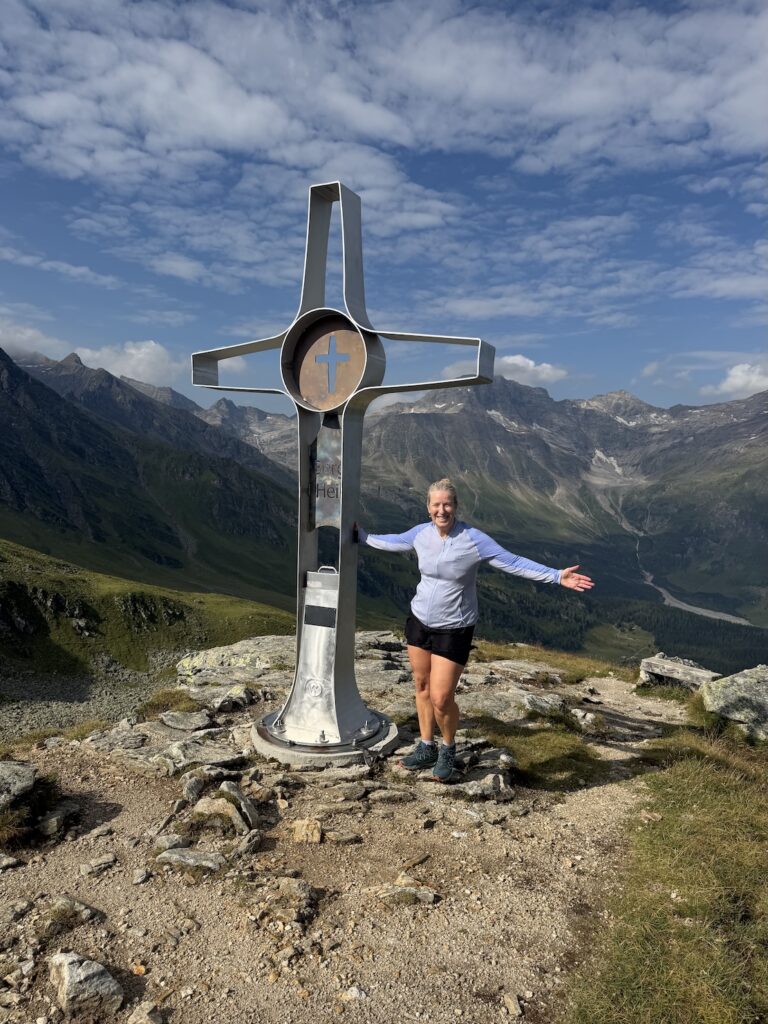
You don’t build confidence by waiting until you’re fearless.
You build confidence by taking one prepared step after another.
So pack your backpack.
Download your Hiking checklist for over 50.
Start with a trail that feels comfortable.
Then take on one that’s a little longer, a little steeper, and a little more challenging.
One day you’ll look back and realize that what once seemed impossible has become your normal.
The greatest adventure of your life may not be behind you; it may simply be waiting around the next bend in the trail. Because you want to see where the next corner leads you!
Happy traveling. 🙂
Here are some outside resources for more information:
- Leave No Trace Center for Outdoor Ethics when traveling in the backcountry
- National Park Service hiking safety information
- American Hiking Society trail resources
Have a suggestion that I missed? Please post it in the comment section.
Looking for some coaching to get you started? Message me!
Traveling Solo? Check out my book Traveling Solo For Women Over 50 (not just for women or ladies over 50). (Or download the E-book Traveling Solo Over 50 – Diana Proemm)